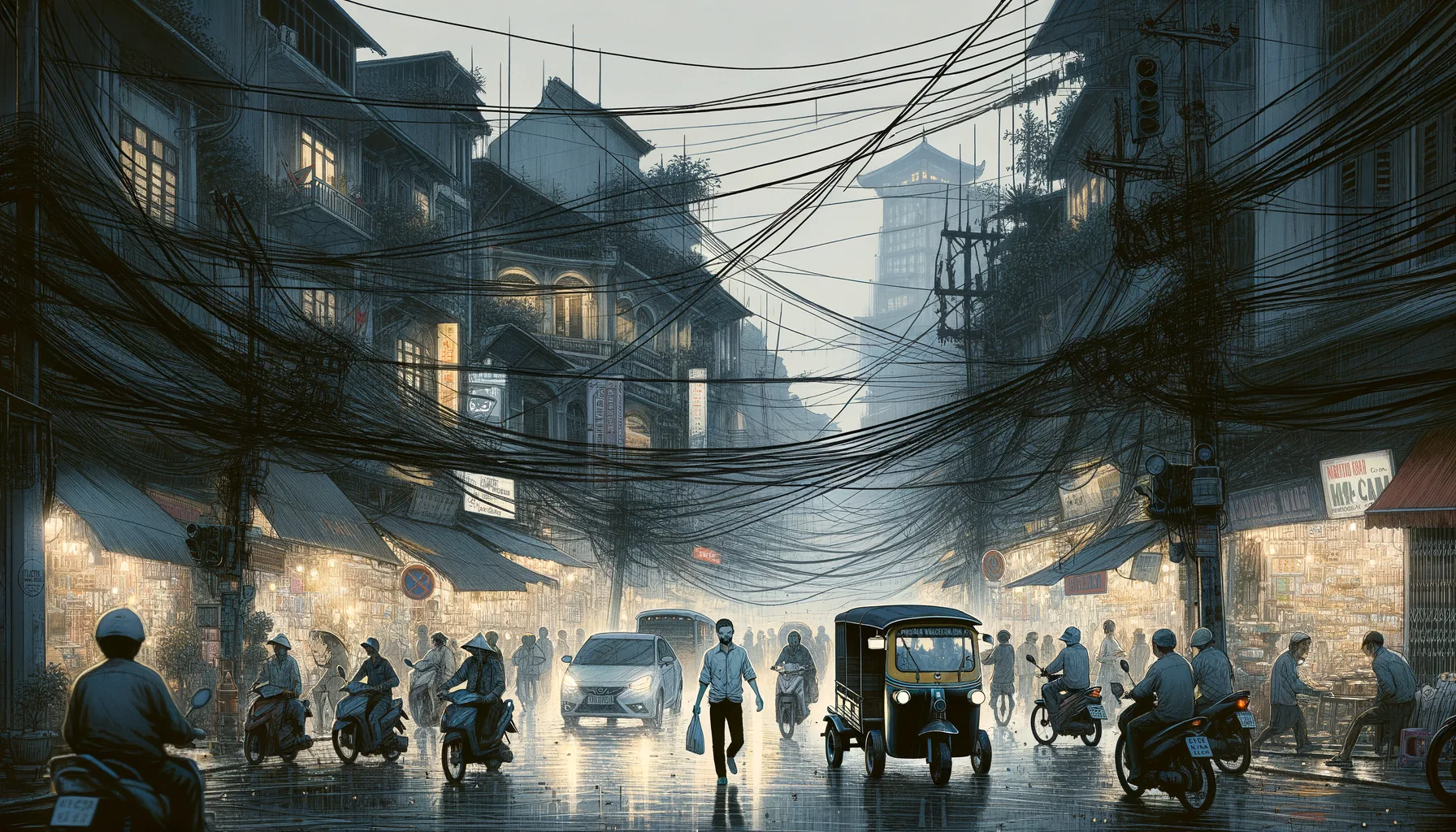
Hanoi does not make a great first impression if your nervous system prefers order.
The roads look lawless.
The horns sound personal.
The intersections resemble a group project with no leader.
Everyone appears to be moving at once, and nobody seems especially interested in your comfort.
So naturally, as a foreigner, I assume the next stage is robbery.
That is what the visuals suggest.
And yet, oddly enough, the city often feels safer than it looks.
For a place that can visually resemble a low-budget apocalypse directed by motorbikes, daily life in Hanoi is not automatically predatory.
People stare, yes.
People honk, constantly.
People improvise traffic like they are trying to beat reincarnation’s cutoff time.
But random street menace?
Less than many outsiders expect.
That surprised me.
In some places, calm streets hide real tension.
In Hanoi, noisy streets often hide ordinary life.
The city can look rougher than it feels.
That does not mean nothing happens.
It does not mean theft is impossible.
It does not mean you should wave luxury items around like a social experiment.
It just means the vibe and the actual day to day threat level are not always the same thing.
Even the social energy is different.
A lot of people are curious, direct, noisy, intrusive by first-world standards, and somehow still less threatening than the polished, distant, professionally detached coldness you get in places that look far more organised.
Hanoi can be rude in sound and soft in substance.
That is not always easy for foreigners to read.
I hear a thousand horns and think aggression.
Sometimes it is just logistics.
I see a crowded street and think risk.
Sometimes it is just density.
I see chaos and assume danger.
Sometimes it is just poor planning with excellent local adaptation.
That distinction matters.
Because fear is expensive.
And misunderstanding a place is one of the easiest ways to exhaust yourself in it.
For me, Hanoi became one of those cities where the first reaction and the actual experience did not match.
It looked like it should be more dangerous.
It often felt less dangerous than the visual drama suggested.
That contrast made the city weirder.
And, strangely, more likable.