
The airport was just the trailer.
The real movie started when I reached my first base in Hanoi.
I will not call it a condo.
I will not call it a hotel.
It was just the place we stayed.
That was when Vietnam stopped being an experience and started being an operating system.
First thing I noticed: noise.
Not loud in a dramatic way.
Loud in a permanent way.
Like the city had collectively agreed that silence was an outdated concept and no longer worth funding.
Horns in the distance.
Engines.
Voices.
Construction that sounded both urgent and eternal.
Then the air.
You do not breathe it.
You negotiate with it.
There is a special kind of Hanoi morning where I step outside, take one deep breath, and my lungs immediately file a complaint with management.
I call it a lung attack morning.
The funniest part is that nobody reacts.
People just continue with life as if oxygen is optional and adaptation is the real national sport.
Then came the practical side of daily life.
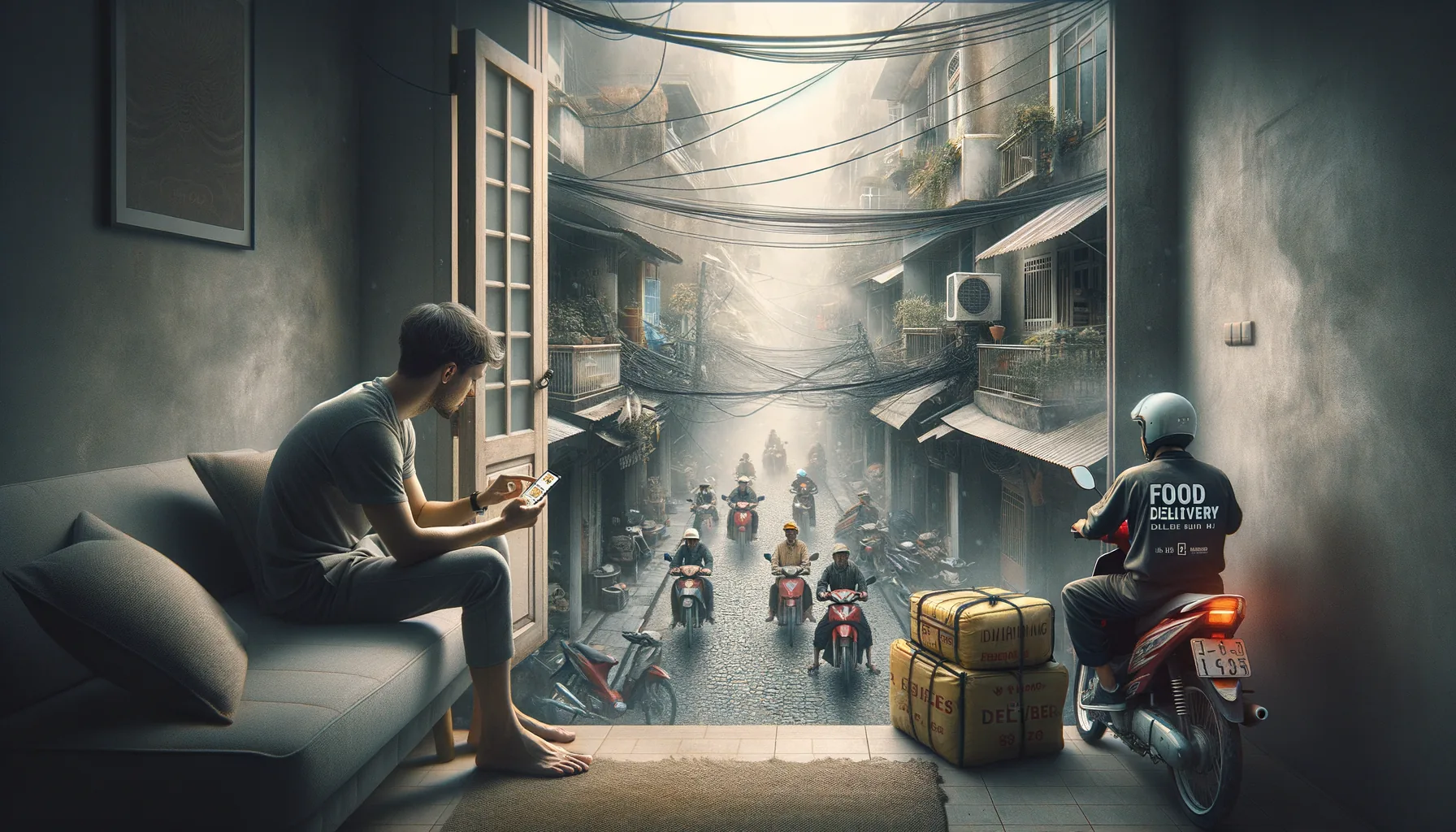
Deliveries do not arrive to your door.
They arrive to your patience.
Come down.
Come outside.
Wait here.
Just one minute.
That last one, of course, is emotional fiction.
Somewhere between convenience and chaos, the system decided I was now part of the logistics chain.
And the apps.
The apps are beautiful.
Smooth.
Fast.
Modern.
Global.
Sexy, even.
Then I try to depend on them.
Suddenly: language wall, payment mismatch, confused drivers, wrong location pin, messages I cannot read, and the quiet realization that this whole digital experience was designed with exactly zero concern for my existence.
Vietnam has perfected something rare.
It looks modern.
Until I need it to work for real.
That was when I understood the country was not difficult because it was fully broken.
It was difficult because it was half structured and half improvised.
Enough system to function.
Enough chaos to keep me humble.