
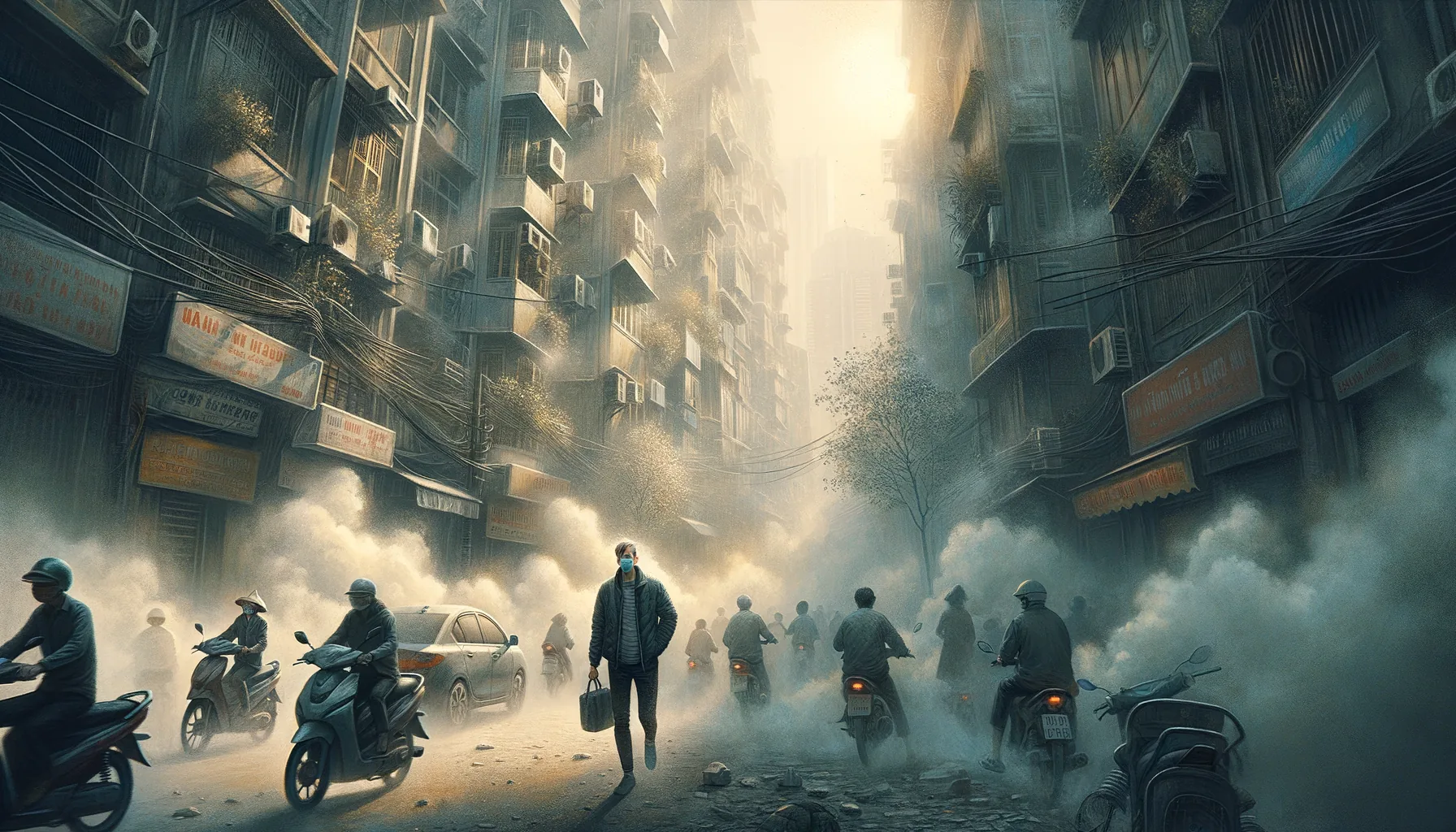
Some cities wake you with birds.
Some with church bells.
Some with quiet ambition.
Hanoi wakes you by reminding your respiratory system that optimism has limits.
There is a special kind of morning here where you step outside, take one deep breath, and immediately feel like the city has entered your lungs without consent.
I call these lung attack mornings.
The air has texture.
That is never a good sign.
And the absurd thing is how normal it all becomes.
Motorbikes coughing.
Construction dust floating like a side hustle.
Random burning somewhere in the distance.
Incense smoke inside.
Exhaust outside.
A full ecosystem of slow violence, and everyone moving through it like the body was a temporary inconvenience anyway.
What amazes me is not that the pollution exists.
What amazes me is the hierarchy of concern.
People will worry about auspicious dates, lucky directions, and invisible spiritual risk while casually inhaling enough urban exhaust to make a lung file for asylum.
It is not that they do not know.
It is that the harm is slow, ordinary, and therefore socially acceptable.
That is one of the city's darkest talents.
It can normalize almost anything if it repeats often enough.
You adapt.
You stop commenting.
You buy the mask.
You joke about it.
You continue.
Then one day you leave, take a full breath somewhere cleaner, and suddenly realize your body has been quietly negotiating with damage this whole time.
That is when the joke stops being abstract.
Hanoi is not the only polluted city in the world.
But it has a particularly intimate way of making pollution feel domestic.
Not a disaster.
A roommate.
And that is what makes it dangerous.
Because once something becomes background, it no longer has to justify itself.