
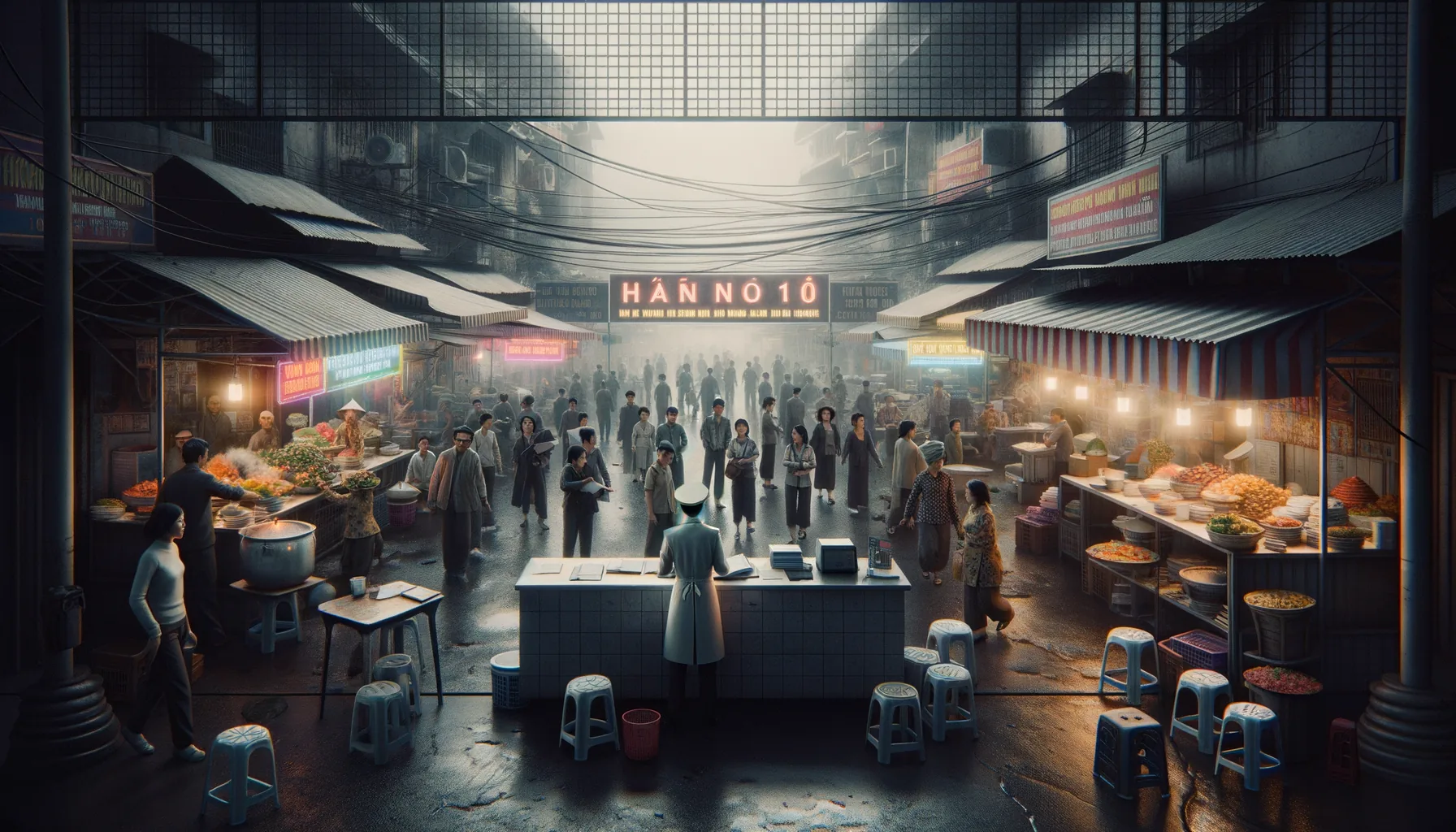
One thing Vietnam got right early for me was the people.
Not the systems.
Definitely not the paperwork.
And absolutely not customs, who had all the warmth of unpaid debt collectors with fluorescent lighting.
But the people, yes.
After the queue, the confusion, the staring, the airport shuffle, and the first administrative reminder that this country can make a simple process feel like a loyalty test, something else appeared.
Human warmth.
That part hit fast.
I remember how abrupt the contrast felt. Five minutes earlier I was being processed like an administrative inconvenience. Then suddenly the human part of the country reappeared and the whole mood changed.
Someone was smiling.
Someone was waving.
Someone was trying to help, even if the English was being held together by optimism and one surviving noun.
Someone was already asking if I had eaten, slept, needed coffee, or wanted to sit down before life continued bullying me.
And unlike some countries where friendliness has to be negotiated carefully over time, Vietnam often starts with warmth and sorts out logic later.
That sounds chaotic.
It is.
But it is also charming.
The official side of the country can make you feel like your existence is a filing problem. The human side can make you feel like you were expected all along.
That contrast matters.
Because if Vietnam only had the bureaucracy, it would be unbearable. If it only had the planning, or what passes for planning, the whole thing would feel like a traffic simulation designed by an overworked prankster.
But the people save it early.
Even the social rhythm feels different.
A lot of places make you earn your way into warmth. Vietnam often offers it first.
A smile.
A laugh.
A half invitation.
A plate of something you did not order but are now morally responsible for finishing.
And then there is the famous drinking culture.
Một, hai, ba.
Three numbers. One command. Zero negotiation.
In some countries you build friendship carefully, over months. Here, one meal and two drinks in, someone is already looking at you like a long-lost cousin who simply took the scenic route to dinner.
That is one of the country’s best qualities. It can be socially fast in a way that feels funny, excessive, and weirdly comforting at the same time.
Of course, this is not universal.
Not every smile is sincere. Not every friendly tone is clean. And once money, paperwork, customs, or some other grey-zone nonsense enters the room, the atmosphere can change very quickly.
Customs especially deserve their own category.
I have seen airport officials elsewhere who were bored. I have seen airport officials who were robotic. Here, I met the special breed that looked at me like I had already done something wrong and the conversation was simply about price discovery.
That is not the warmth I’m talking about.
The warmth starts once you get past the machinery.
Once you leave the glass counters, stamped paper, and state-approved facial expressions, Vietnam often becomes much more likable.
That is part of what makes the country so psychologically confusing.
You can go from being processed like a minor inconvenience to being treated like a guest within the same hour.
And that first contrast stays with you.
The country may not always know how to move a queue. But it knows how to make a table feel alive.
It may not always know how to organize a road. But it knows how to turn strangers into company very quickly.
And honestly, that matters more than outsiders expect.
Because systems are what make a place efficient. People are what make a place bearable.
Vietnam would be much harder to love without that smile-first energy, even if the customs officer still looks like I owe him money from a previous life.