
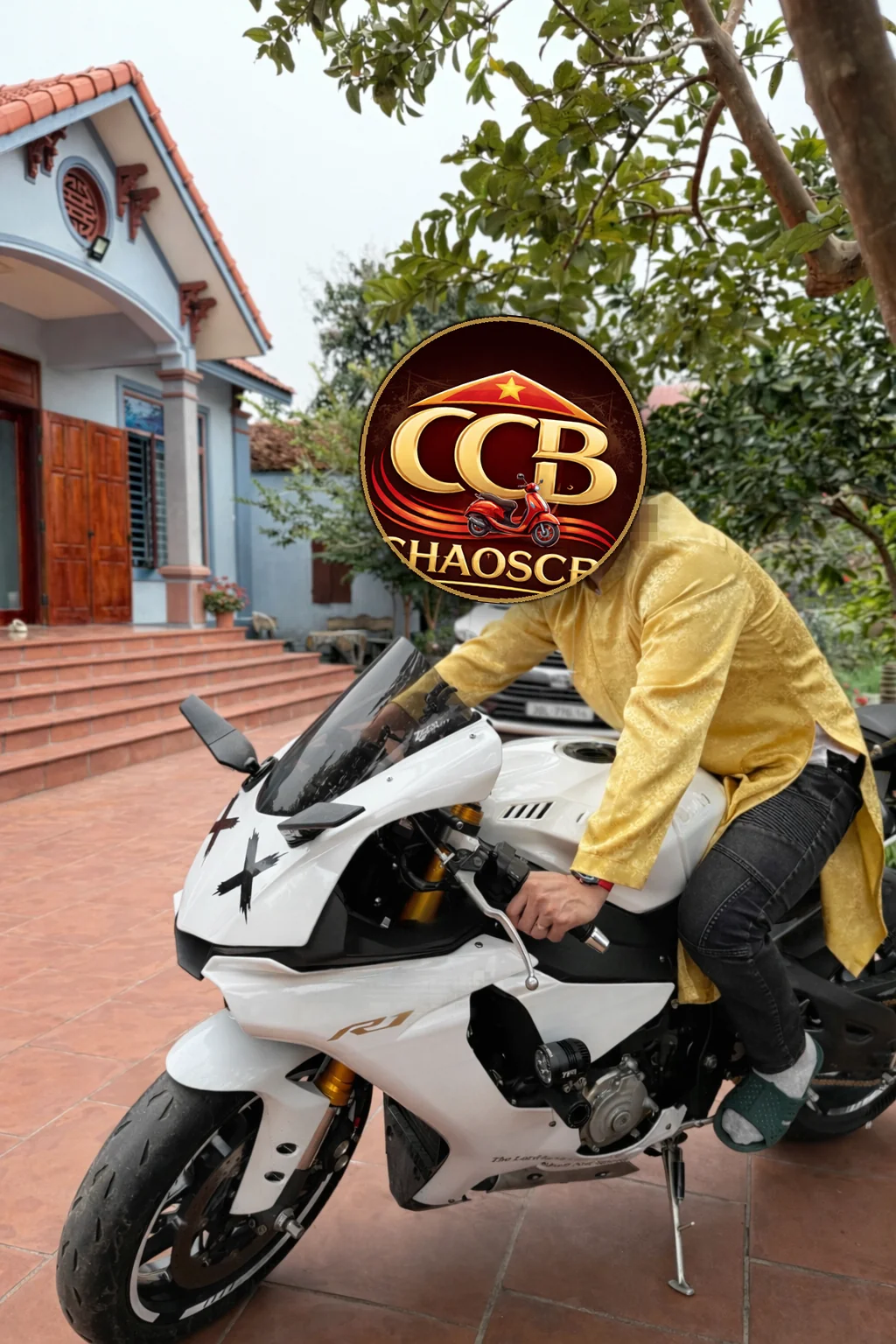
I did not buy the R1 because it was sensible.
Nobody buys a Yamaha R1 because they are making balanced life decisions.
I bought it because it was an R1.
Crossplane.
Anniversary edition.
One of those bikes that does not even need to move to make you feel twelve years old again.
So naturally, I impulse bought it.
That was my first mistake.
The second mistake was assuming I had bought a bike.
What I actually bought was a premium recurring inconvenience package with fairings.
On paper, it looked beautiful.
In real life, it mostly existed as a topic of repair.
The first real problem was the charging system.
Dead battery.
No start.
Weak crank.
Sometimes the TFT did not even light up.
The kind of electrical behavior that makes a man stare at a machine in silence and start bargaining with God.
Then came the parts.
Stator.
Regulator.
Connectors.
Battery.
Then another battery.
Then the battery I bought overseas that never even made it back because apparently even the airport wanted a slice of the joke.
For one brief moment, it looked fixed.
Charging numbers came back healthy.
The bike sat for twenty, then forty eight hours, and still started.
Hope returned like an idiot.
Then the coolant started dripping onto the headers.
That was one of those moments where the universe stops being subtle.
Smoke.
Sweet smell.
Green liquid.
Hot engine.
Perfect.
At that point the bike had moved beyond ownership and into theater.
And here is the irritating part.
The dealer actually tried.
That is what made the story worse.
If he had been cleanly scammy, the moral structure would be neat.
You get angry.
You leave.
You know where to put the hate.
But no.
He often showed up.
Picked up the bike.
Moved it around.
Ran checks.
Tried to solve things.
Absorbed small costs here and there.
Even got stopped by traffic police while transporting it for me.
That police stop deserves its own medal.
The bike was so loud and the system so stupid that even while the dealer was trying to help me, police threatened to impound it and squeezed him for around two million.
That was the moment I realized the problem was no longer just the bike.
Even if it worked, where exactly was I supposed to enjoy it?
By the third time, the whole emotional shape of the story had changed.
The bike still had issues.
But the bigger problem was Vietnam itself.
Slow traffic.
Scooter lanes.
Stop go roads.
No room to stretch the thing.
No chance to even pretend I was living the liter bike fantasy.
I do not think I have ever properly used third gear here.
A supersport in Vietnam is basically an angry piece of expensive furniture with a license plate.
That was when the dream split in half.
One half was mechanical disappointment.
The other half was environmental insult.
Even when it ran, what was I going to do, hit thirty kilometers an hour harder?
That is the real heartbreak.
A dream machine inside the wrong ecosystem becomes something tragicomic.
You spend premium money to own a fantasy and end up managing a moody electrical case study in a city that cannot even let the fantasy breathe.
And the final insult is this:
after all the stator, regulator, connectors, batteries, coolant, towing, checking, rechecking, and dealer effort, trust never came back.
That is the most expensive part.
Not the invoices.
Not the parts.
Trust.
Because once a bike stops being freedom and starts becoming suspense, the relationship is already half dead.