
The strangest thing about Vietnam is not the chaos.
It is how the chaos eventually develops emotional leverage over you.
This is not a country that seduces through efficiency.
It does not win by being elegant.
It does not make life easy just to prove a point.
What it does instead is harder to explain.
It gets under your skin through repetition.
The food.
The people.
The heat.
The noise.
The narrow roads.
The little shops.
The way someone is always nearby.
The way life refuses to become sterile.
The way Tết changes the air.
The way the countryside can suddenly make the whole country feel forgivable.
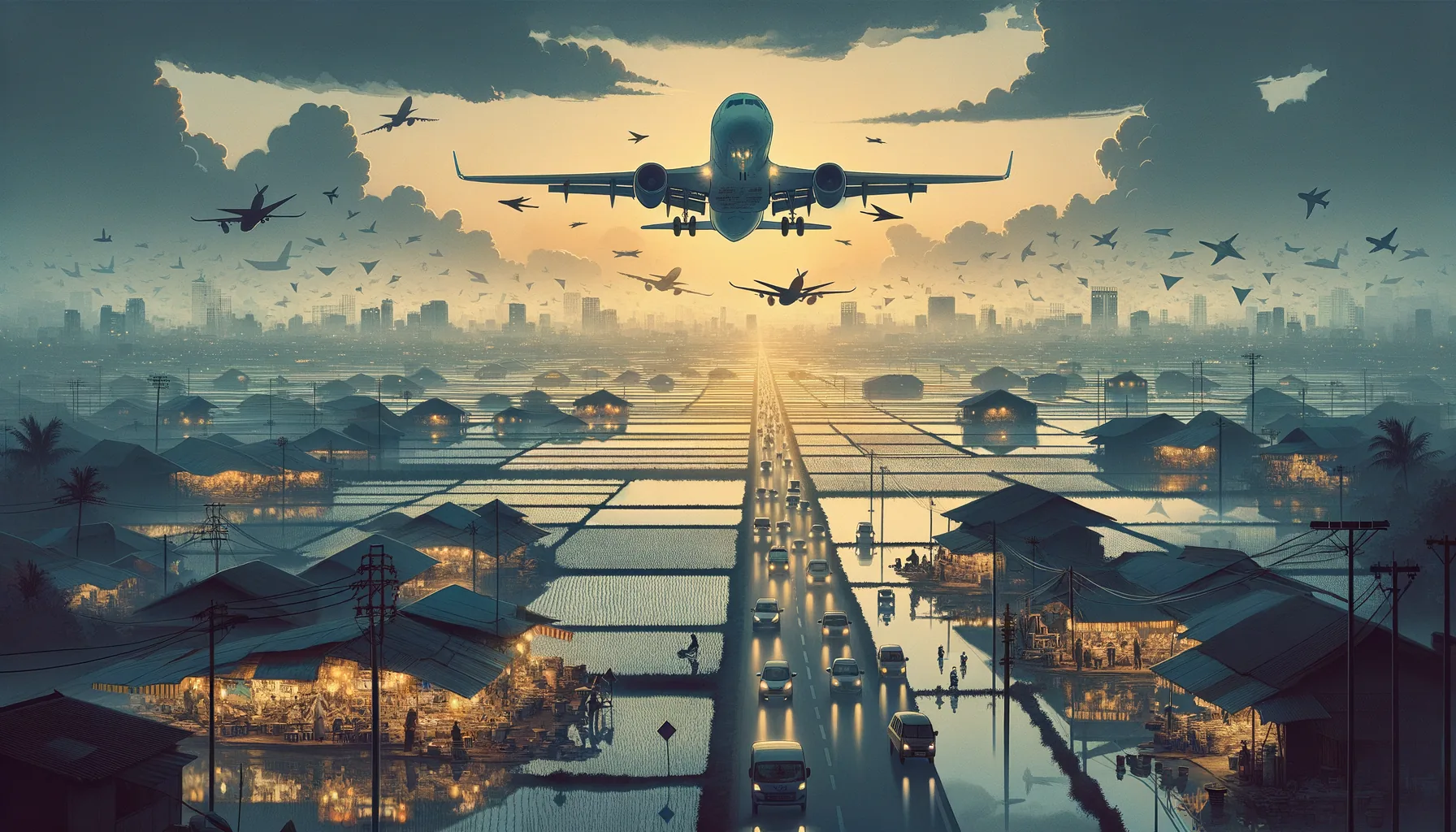
I noticed this very clearly when I flew back on the eve of Tết.
From the sky, Vietnam looked calm.
Soft.
Familiar.
Almost gentle.
And I had this weird feeling that I may have fallen in love with it.
Not in a romantic movie way.
In a more dangerous way.
The kind where a place irritates you daily, drains you regularly, and still feels like somewhere your body has started to recognize.
Maybe it was not love.
Maybe it was habit.
Maybe habit is just love after enough inconvenience.
I am still not fully sure.
But the feeling was real.
That is what makes Vietnam hard to judge honestly.
If it were only bad, the decision would be easy.
If it were only charming, the writing would be boring.
But it is neither.
It is frustrating and alive.
Badly planned and emotionally sticky.
Noisy and somehow memorable.
Exhausting and weirdly warm.
Even the contradictions start to become part of the attachment.
You complain about the horns.
Then you leave and notice how strange the silence feels.
You complain about the social pressure.
Then you leave and notice how thin some more efficient societies can feel.
You complain about the chaos.
Then you catch yourself missing the energy.
That is the trap.
And maybe also the gift.
Vietnam can make you feel like you are surviving a civic experiment by day and returning to something strangely human by night.
I still think the roads are ridiculous.
I still think the paperwork is a historical reenactment with photocopies.
I still think too much of daily life here feels like avoidable nonsense.
And yet.
Somewhere between the food, Tết, the warmth, the repeated routines, and the emotional weight of having built real life here, the place stopped feeling entirely foreign.
That is hard to admit when you have spent so much time accurately roasting it.
But truth is truth.
Sometimes home is not the place that makes the most sense.
Sometimes it is the place that has negotiated with you for long enough that leaving starts to feel stranger than staying.